Key points
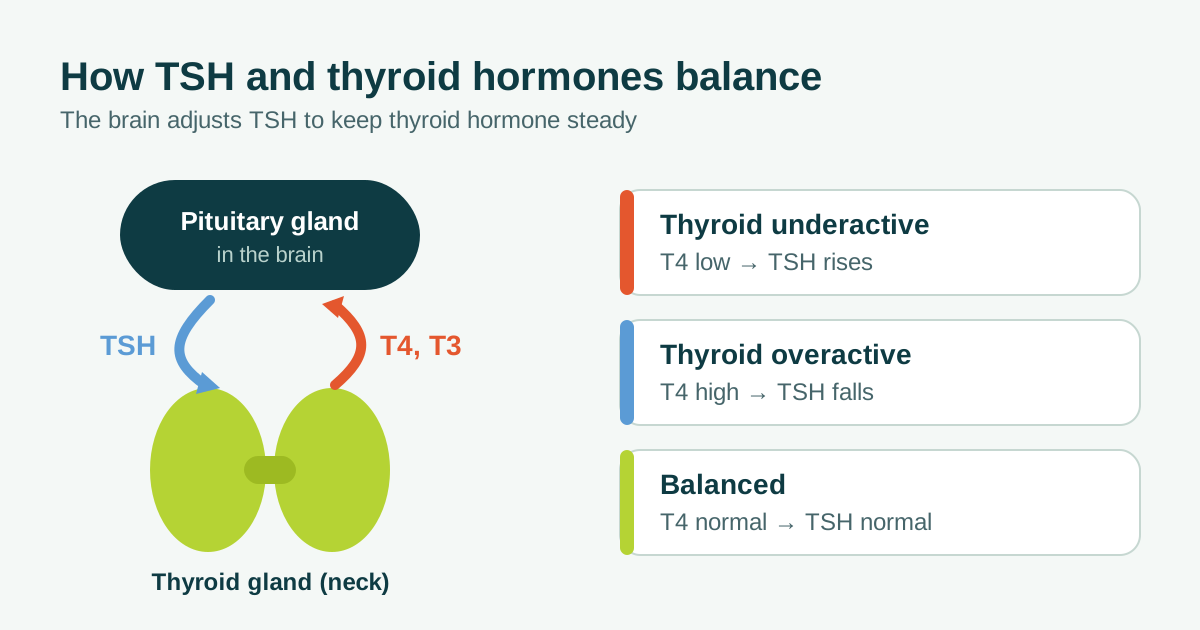
- TSH is usually the first test. It rises when the thyroid is underactive and falls when it is overactive.
- A typical adult TSH range is about 0.4–4.0 mIU/L, but every lab sets its own range.
- Doctors read TSH together with free T4 (and sometimes T3) to work out what is happening.
- Biotin supplements, recent illness, some medicines and pregnancy can all change results.
The tests on your report
The thyroid is a butterfly-shaped gland in the neck that makes hormones controlling your metabolism. The pituitary gland in the brain controls it by releasing TSH.
- TSH (thyroid-stimulating hormone): the pituitary's signal to the thyroid. If thyroid hormone is low, TSH goes up to push harder. If thyroid hormone is high, TSH falls.
- Free T4 (FT4): the main hormone the thyroid makes, measured in its active, unbound form.
- T3 or free T3 (FT3): the more active hormone, mostly made from T4 in the body. Most useful when an overactive thyroid is suspected.
- Total T3 and total T4: include hormone bound to proteins. Many Indian "thyroid profile" packages report these; free levels are usually more reliable.
- Anti-TPO antibodies: show whether the immune system is attacking the thyroid (Hashimoto's thyroiditis), the commonest cause of an underactive thyroid.
Typical ranges
Use your own lab's reference range first. As a rough guide for adults who are not pregnant:
| Test | Typical adult range |
|---|---|
| TSH | About 0.4–4.0 mIU/L |
| Free T4 | About 0.8–1.8 ng/dL (10–23 pmol/L) |
| Free T3 | About 2.3–4.2 pg/mL |
Ranges vary between labs and methods, and TSH tends to be a little higher in older adults.
What the patterns mean
| TSH | Free T4 / T3 | What it usually suggests |
|---|---|---|
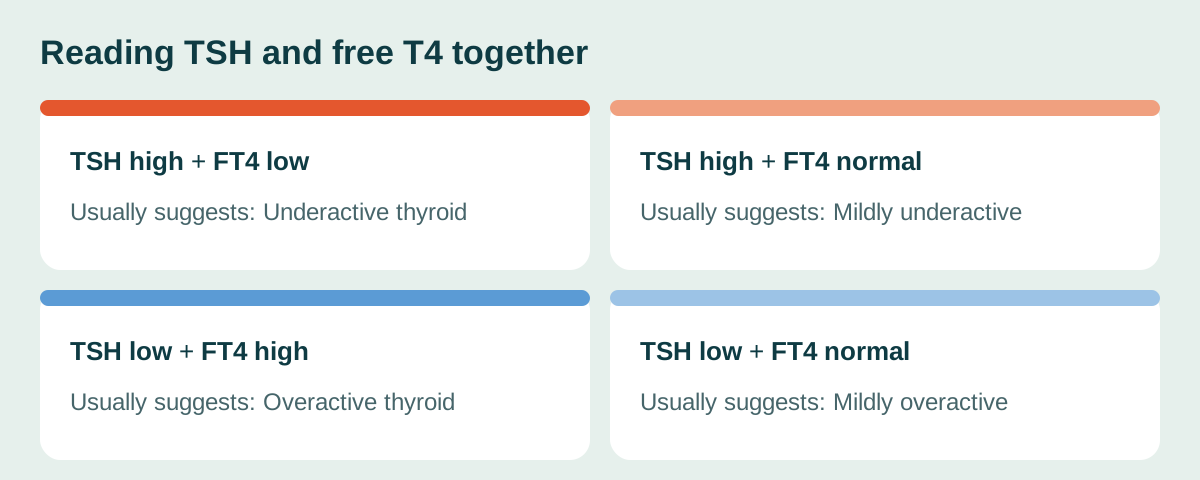
| High | Low | Underactive thyroid (overt hypothyroidism) |
| High | Normal | Mildly underactive thyroid (subclinical hypothyroidism); often re-tested before deciding on treatment |
| Low | High | Overactive thyroid (hyperthyroidism) |
| Low | Normal | Mildly overactive thyroid (subclinical hyperthyroidism), or effects of illness or medicine |
| Low or normal | Low | Uncommon; can point to a pituitary problem and needs a specialist |
A single mildly abnormal TSH is often repeated after 6–12 weeks, because TSH can shift temporarily after an illness. Whether a mildly raised TSH needs treatment depends on the level, your symptoms, antibodies, age and plans for pregnancy. That is a decision to make with your doctor.
What can affect results
- Biotin (vitamin B7): common in hair, skin and nail supplements. It can make some lab tests read falsely, including thyroid tests. Tell your doctor and the lab if you take it; they may ask you to pause it before the test.
- Thyroid medicine timing: if you already take thyroid medicine, ask your doctor whether to take it before or after the blood draw on test day.
- Recent illness, surgery or hospital stay: can temporarily change TSH and T3.
- Some medicines: steroids, amiodarone, lithium and others can affect thyroid results.
- Different labs: try to repeat tests at the same lab so results are comparable.
In pregnancy
Thyroid hormone needs rise in pregnancy and the normal TSH range is lower, especially in the first trimester. Doctors use pregnancy-specific ranges. If you are pregnant or planning a pregnancy, ask your doctor to check your thyroid and interpret it with these ranges.
When to see a doctor
- Your TSH is outside your lab's range, even if you feel well.
- You are pregnant or planning a pregnancy and have any thyroid result to discuss.
- You have a fast or irregular heartbeat, tremor, weight loss, or swelling in the neck.
- Severe drowsiness, confusion or a very slow heartbeat: seek emergency care or call 112.
Questions to ask your doctor
- Which of my results are outside the range, and by how much?
- Do I need a repeat test, and when?
- Should I have an anti-TPO test?
- Do any of my medicines or supplements affect these tests?
Related guides: Hypothyroidism: complete guide, Hyperthyroidism: complete guide, Thyroid and pregnancy and Thyroid diet: myths and facts.
Frequently asked questions
Do I need to fast for a thyroid test?
Usually not. Many people test in the morning for consistency. Follow your lab's instructions, and ask your doctor about thyroid medicine timing on test day.
My TSH is 6. Do I need medicine?
Not necessarily. A mildly raised TSH with normal free T4 is often re-tested first. Your doctor decides based on the level, symptoms, antibodies and pregnancy plans.
Why does my report show total T3 and T4 instead of free?
Many test packages include totals. They can be affected by protein levels in the blood, so doctors often prefer free T4.
Can thyroid results change from month to month?
Yes, a little. Illness, medicines and lab differences can shift results, which is why doctors look at trends and repeat tests.
Sources
- American Thyroid Association. Thyroid Function Tests (patient information).
- Unnikrishnan AG, et al. Prevalence of hypothyroidism in adults: an epidemiological study in eight cities of India. Indian J Endocrinol Metab 2013;17(4):647–652.
- Alexander EK, et al. 2017 Guidelines of the American Thyroid Association for the Diagnosis and Management of Thyroid Disease During Pregnancy and the Postpartum. Thyroid 2017;27(3):315–389.
- US Food and Drug Administration. Biotin may interfere with lab tests.
This article is general information for adults in India and is not a diagnosis or a treatment plan. Always discuss results and any changes with your own doctor. Read our editorial policy.